
Advertisements
Hello, fellow fans! I’m excited to dive into the captivating world of Boardwalk Empire, one of HBO’s most ambitious dramas that vividly depicts the undercurrents of American corruption during the alluring Jazz Age.
Boardwalk Empire first graced our screens on September 19, 2010, and enthralled audiences for five unforgettable seasons, wrapping up on October 26, 2014, with a total of 56 mesmerizing episodes. Crafted by the brilliant Terence Winter and inspired by Nelson Johnson’s insightful non-fiction on Atlantic City, this HBO gem follows Enoch “Nucky” Thompson as he maneuvers through the criminal underbelly of the Prohibition era. With each episode clocking in at about 60 minutes, the pilot—masterfully directed by Martin Scorsese—establishes a cinematic atmosphere that resonates throughout the entire series.
Set against the backdrop of Atlantic City during the roaring 1920s and early 1930s, the series expertly chronicles the ascent of organized crime in this seaside playground. Boardwalk Empire transcends traditional gangster tales; it delves into how Prohibition spawned a shadow economy where the lines between politicians, criminals, and law enforcement blurred. Through its impeccable attention to period detail, intricate character arcs, and unyielding examination of American corruption, the show crafts a viewing experience that feels both historically rich and dramatically captivating.
Atlantic City: The Crossroads of Crime and Politics
Atlantic City serves as a brilliant lens into Prohibition-era America through the lens of Boardwalk Empire. The ban on alcohol carved out unprecedented avenues for corruption and brutality, showcasing how the city’s distinctive geography and political framework facilitated bootlegging operations. From offshore rum-running to complex distribution networks stretching to New York and Chicago, each episode intricately weaves together local politics, federal law enforcement, and organized crime—illustrating how Prohibition reshaped American society.
The brilliance of the show lies in its portrayal of how Prohibition didn’t curb drinking; instead, it forced it underground, birthing an empire of corruption that infiltrated every level of government. Whether depicting shipments from Ireland, intricate dealings with New York families, or the daily grind of speakeasies, Boardwalk Empire powerfully illustrates how this so-called “noble experiment” acted as fuel for the rise of organized crime in America.
Nucky Thompson: The Politician Turned Criminal
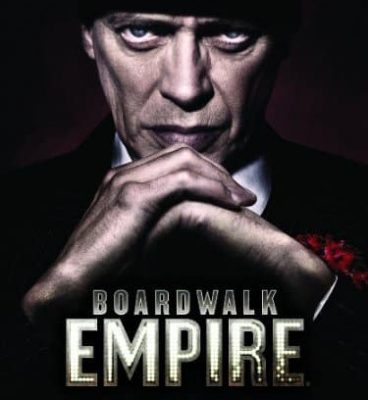
In an unforgettable performance, Steve Buscemi brings Enoch “Nucky” Thompson to life, a character who transitions from a corrupt politician to an influential crime boss. Based on the historical figure Enoch L. Johnson, Nucky embodies the fine line that separates political legitimacy from criminal enterprise in the gritty landscape of Prohibition. He exemplifies the era’s pragmatic corruption, justifying increasingly violent decisions as necessary for survival in a world devoid of law.
As Boardwalk Empire unfolds, Nucky’s metamorphosis from political fixer to a criminal kingpin brilliantly mirrors America’s own evolution during Prohibition. Buscemi’s performance encapsulates Nucky’s wit and charm while revealing the moral compromises essential to ascend the criminal hierarchy. His path serves as a poignant exploration of how good intentions can spiral into malevolence when the very system is riddled with corruption.
Jimmy Darmody: The Voice of a Disillusioned Generation
Portrayed by Michael Pitt, Jimmy Darmody epitomizes the lost generation of World War I veterans navigating a world that has left them disillusioned. His dynamic with Nucky evolves into a mix of surrogate father-son relationships and fierce rivalry, highlighting the clash between entrenched political corruption and the new wave of organized crime. The arc of his character weaves together themes of loyalty, aspiration, and the psychological scars of war.
Jimmy’s journey in Boardwalk Empire showcases how Prohibition carved out spaces for young men to pursue power and wealth outside traditional routes. His military background, coupled with his yearning for Nucky’s approval, makes him an invaluable ally yet a perilous adversary. Through him, the series poignantly reflects the way historical calamities can taint an entire generation’s moral framework.
When Violence Becomes the Only Language
The series delivers its heart-wrenching impact through episodes that starkly portray the violent reality of the Prohibition era. From the shocking events that conclude Season 1 to the calculated elimination of rivals throughout the series, Boardwalk Empire never glamorizes criminal brutality. These instances reveal how the illegal alcohol trade warped business disputes into fatal outcomes and political disagreements into fierce battles.
The show’s portrayal of violence illustrates a world where legal recourse is nonexistent, compelling its characters to resort to intimidation and even murder to solve conflicts. Through intimate betrayals or sweeping gang wars, the series steadfastly commits to showcasing the human cost behind America’s failed Prohibition experiment.
A Triumph for HBO and Beyond
Boardwalk Empire emerged as a phenomenal success for HBO, solidifying the network’s legacy for top-notch period dramas renowned for their cinematic quality. It proved that viewers crave complex historical narratives that bravely confront America’s murkier chapters. You can still catch Boardwalk Empire on HBO Max, Hulu with HBO add-on, or purchase it on Prime Video. Its legacy continues to influence subsequent period crime dramas, setting a high bar with its melding of historical events and character-driven storytelling. The series garnered numerous Emmy nominations and accolades for its outstanding writing, performances, and the captivating recreation of the Jazz Age’s essence.
The Definitive Drama of Prohibition
For those who adore period pieces, tales of crime, or narratives that peel back the layers of American history, Boardwalk Empire is an absolute must-watch on HBO Max. The blend of authentic historical settings and compelling characters creates an experience that is both illuminating and thoroughly enjoyable.
Why This Series Reflects America’s Dark Past
Boardwalk Empire rises above mere crime dramas, offering both entertainment and a profound examination of how Prohibition molded modern America. With Winter and Scorsese at the helm, this series pays homage to the era’s complexity and the flawed humanity of its characters, illustrating how well-meaning policies can yield unintended ramifications that reshape societal landscapes. Its dedication to historical precision, coupled with exceptional storytelling and performances, renders it indispensable for anyone drawn to American history or simply seeking remarkable television. Whether your interest lies in political intrigue, crime narratives, or the immersive period ambiance, Boardwalk Empire promises an enlightening viewing experience that sheds light on both past and present.
Series Information
Episode Count: 56 episodes (complete series)
Available On: HBO Max (US), Hulu with HBO add-on (US), Prime Video (for purchase/rent)
Release/End Years: 2010-2014
IMDb Rating: 8.6/10
Genre: Period Crime Drama, Historical Drama
Production Type: American Television Series
Status: Completed series
Main Characters: Steve Buscemi (Nucky Thompson), Michael Pitt (Jimmy Darmody), Kelly Macdonald (Margaret Schroeder)
Key Supporting Cast: Michael Shannon (Nelson Van Alden), Shea Whigham (Eli Thompson), Stephen Graham (Al Capone), Vincent Piazza (Lucky Luciano)