

Mesh Wi-Fi vs. Traditional Router: Which Do You Need?
Advertisements
Are you tired of Wi-Fi dead zones, dropped connections, or slow internet speeds in certain parts of your home? You’re not alone. Many households struggle with inconsistent Wi-Fi, and often, the culprit is an outdated or insufficient networking setup. The good news is, you have options beyond just upgrading your internet plan. The big question often comes down to: do you need a traditional router or is it time to upgrade to mesh Wi-Fi?
This post will break down the differences between mesh Wi-Fi vs. traditional router setups, helping you understand their pros and cons. By the end, you’ll have a clear idea of which system is the right fit to bring reliable, fast internet to every corner of your home.
Understanding the Traditional Router
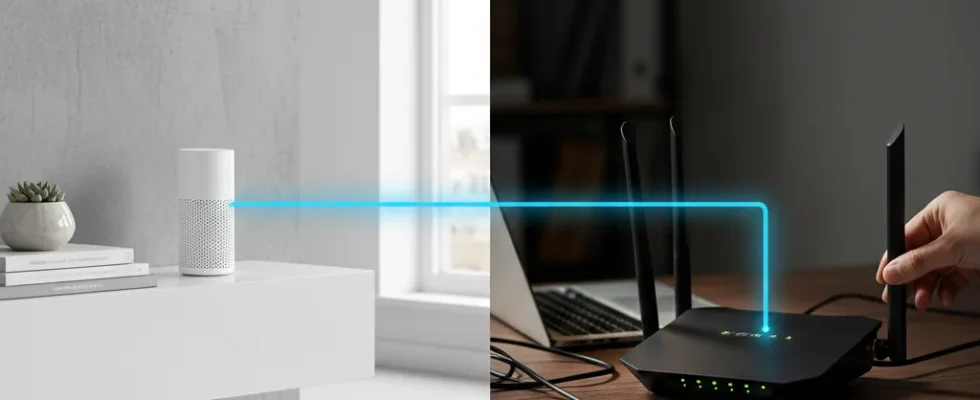
For years, the traditional wireless router has been the backbone of home networks. It’s a single device that connects directly to your modem, broadcasting a Wi-Fi signal from a central point. Think of it like a single light bulb trying to illuminate an entire house—it’s bright near the bulb, but corners and distant rooms might be dim or completely dark.
How a Traditional Router Works
A traditional router takes the internet signal from your modem and converts it into a wireless signal that your devices can connect to. It typically has one or more antennas to broadcast this signal. The strength and range of the signal depend on the router’s power, its placement, and obstacles like walls and furniture. Most routers also include Ethernet ports for wired connections.
Pros of Traditional Routers
- Cost-Effective: Generally, traditional routers are significantly cheaper upfront than mesh systems. You buy one device, and you’re good to go.
- Simplicity: For smaller homes or apartments, a single router can be very easy to set up and manage.
- Wired Connections: Often have multiple Ethernet ports, which is great for devices like desktop PCs, gaming consoles, or smart TVs that benefit from a stable wired connection.
Cons of Traditional Routers
- Limited Coverage: Signal strength degrades significantly with distance and through walls, leading to dead zones in larger or multi-story homes.
- Single Point of Failure: If the router goes down, your entire network is offline.
- Performance Drops: As more devices connect and compete for bandwidth, performance can suffer, especially if your router isn’t high-end.
Exploring Mesh Wi-Fi Systems
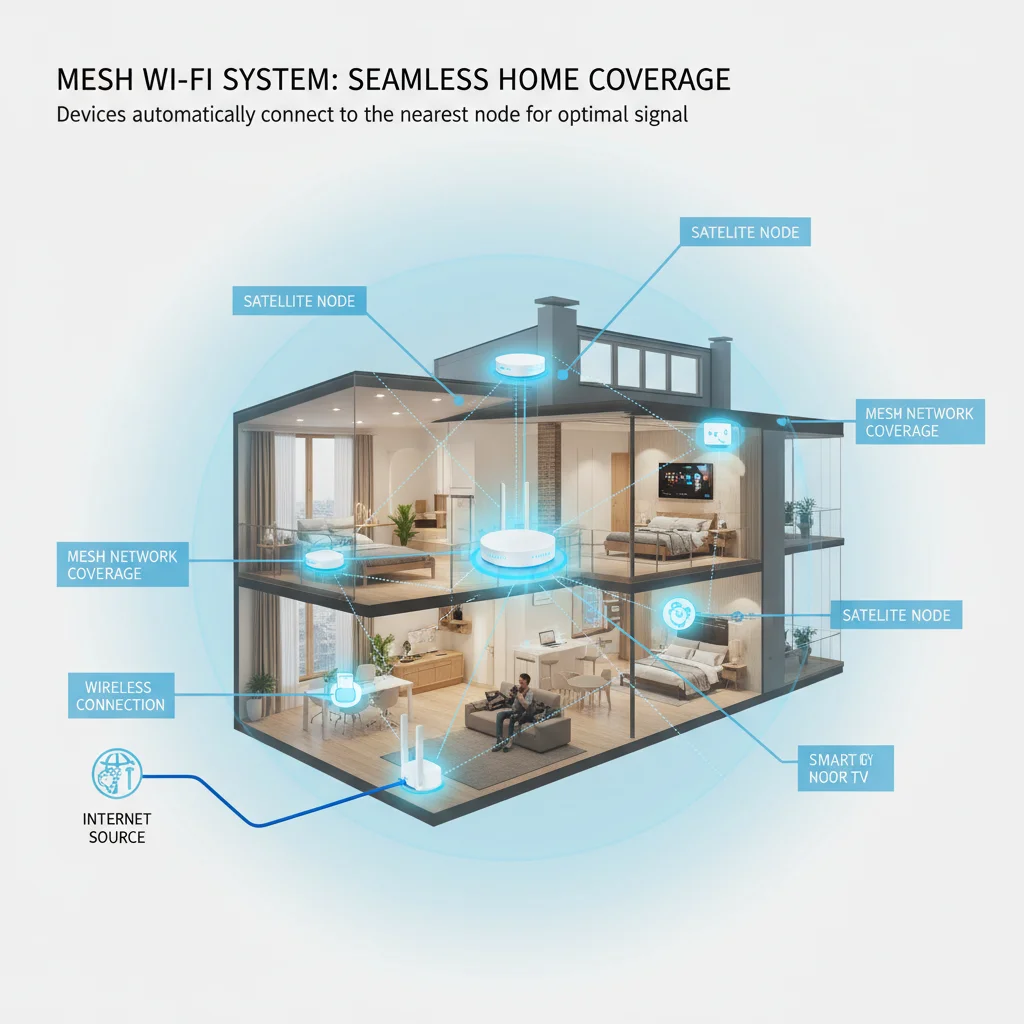
Mesh Wi-Fi is a newer technology designed to eliminate dead zones and provide seamless, strong Wi-Fi coverage throughout your entire home. Instead of a single router, a mesh system uses multiple devices—a main router and several satellite "nodes" or "points"—that work together to create a single, unified network.
How Mesh Wi-Fi Works
With a mesh system, one unit connects to your modem and acts as the main router. The other satellite units are placed strategically around your home. These nodes communicate with each other, forming a "mesh" that blankets your entire living space with Wi-Fi. Your devices automatically connect to the nearest and strongest node as you move around, ensuring a consistent signal without manual switching.
Pros of Mesh Wi-Fi Systems
- Superior Coverage: Eliminates dead zones and provides strong, consistent Wi-Fi signal in every room, even in large or oddly shaped homes.
- Seamless Roaming: Your devices automatically switch between nodes without dropping the connection, which is great for video calls or streaming as you move around.
- Easy Setup and Management: Most mesh systems are designed for easy setup via a smartphone app, offering intuitive controls and features.
- Scalability: You can easily add more nodes to expand your network coverage as needed.
- Aesthetics: Mesh nodes are often designed to be compact and blend into home decor, unlike bulky traditional routers with external antennas.
Cons of Mesh Wi-Fi Systems
- Higher Cost: Mesh systems are generally more expensive than a single traditional router, especially for larger homes requiring multiple nodes.
- Fewer Ethernet Ports: Satellite nodes often have limited (or no) Ethernet ports, which might be a drawback if you have many wired devices.
- Potential for Overkill: For very small apartments or homes, a mesh system might be unnecessary and an overinvestment.
Mesh Wi-Fi vs. Traditional Router: Making Your Decision
So, how do you decide between mesh Wi-Fi vs. traditional router? It largely depends on your home’s size, layout, and your specific internet needs.
When a Traditional Router is Enough
- Small to Medium Homes (under 1,500 sq ft): If you live in a small apartment or a single-story home where your current router provides adequate coverage.
- Budget-Conscious: If cost is your primary concern and you don’t experience significant dead zones.
- Minimal Devices: If you only have a few devices connected to Wi-Fi and don’t heavily stream 4K content or engage in online gaming across multiple rooms.
When to Consider Mesh Wi-Fi
- Large Homes (over 1,500 sq ft): Especially multi-story homes or those with thick walls that block Wi-Fi signals.
- Frequent Dead Zones: If you consistently find areas in your home with no or very weak Wi-Fi signal.
- Smart Home Enthusiasts: If you have many smart devices (lights, thermostats, cameras) throughout your home that need reliable connectivity.
- Heavy Internet Users: If you or your family frequently stream 4K video, play online games, or work from home and require consistent, high-speed Wi-Fi everywhere.
- Aesthetics Matter: If you prefer a cleaner, less obtrusive networking setup.
Quick Takeaways
- Traditional routers are best for smaller homes, are budget-friendly, and offer wired ports.
- Mesh Wi-Fi systems provide superior, seamless coverage for larger homes and eliminate dead zones.
- Your home’s size, layout, and internet usage are key factors in deciding between Mesh Wi-Fi vs Traditional Router.
FAQ
Can I use my existing traditional router with a mesh system?
Some mesh systems can integrate with an existing router in "bridge mode," but it’s often best to use the mesh system’s main unit as your primary router for optimal performance and features.
Do I need a fast internet plan for mesh Wi-Fi to be effective?
Mesh Wi-Fi improves coverage, not necessarily your internet speed from your provider. However, a faster internet plan will allow your mesh system to deliver higher speeds to more devices across your home.
Is mesh Wi-Fi more secure than a traditional router?
Security features vary by brand and model for both types of systems. Many modern mesh systems offer advanced security features, parental controls, and automatic updates, which can enhance overall network security.
Conclusion
Choosing between a traditional router and a mesh Wi-Fi system comes down to matching the technology to your specific needs. For smaller spaces and basic internet use, a good traditional router might be all you need. However, if you live in a larger home, experience frustrating dead zones, or have a smart home with many connected devices, upgrading to a mesh Wi-Fi system is likely the best investment for a consistently strong and reliable internet experience. Evaluate your home and habits, then make the choice that keeps you connected seamlessly.