

How to Build a Beginner Strength Training Routine at Home
Thinking about getting stronger but not keen on hitting the gym? You’re in luck! Building an effective beginner strength training routine at home is totally achievable, convenient, and can be incredibly rewarding. Whether you’re new to fitness or just looking for a way to stay active without leaving your house, this guide will help you lay a solid foundation for your strength journey.
Advertisements
Strength training offers a ton of benefits, from boosting your metabolism and improving bone density to enhancing your mood and overall physical function. And the best part? You don’t need a fancy gym membership or expensive equipment to get started. Let’s dive into creating a routine that works for you, right in your living room.
Why Home Strength Training is Perfect for Beginners
Starting a new fitness routine can feel intimidating, especially when it comes to strength training. Gyms can be overwhelming, and figuring out what to do with all those machines is a challenge. That’s where home workouts shine, particularly for beginners.
Working out at home provides a comfortable, private, and judgment-free space. You can go at your own pace, learn the movements without feeling self-conscious, and fit your sessions into your schedule without commute time. Plus, it’s incredibly cost-effective. You can start with just your body weight and gradually add minimal, affordable equipment as you progress.
This approach helps you build consistency, which is key to seeing results. When exercise is convenient and enjoyable, you’re much more likely to stick with it. Focusing on foundational movements at home also builds a strong base before you consider more advanced routines or gym environments.
Essential Equipment (Optional, But Helpful)
You can absolutely start your beginner strength training journey with zero equipment, relying solely on your body weight. However, a few inexpensive items can significantly expand your exercise options and help you progress. Think of these as investments in your health that won’t break the bank.
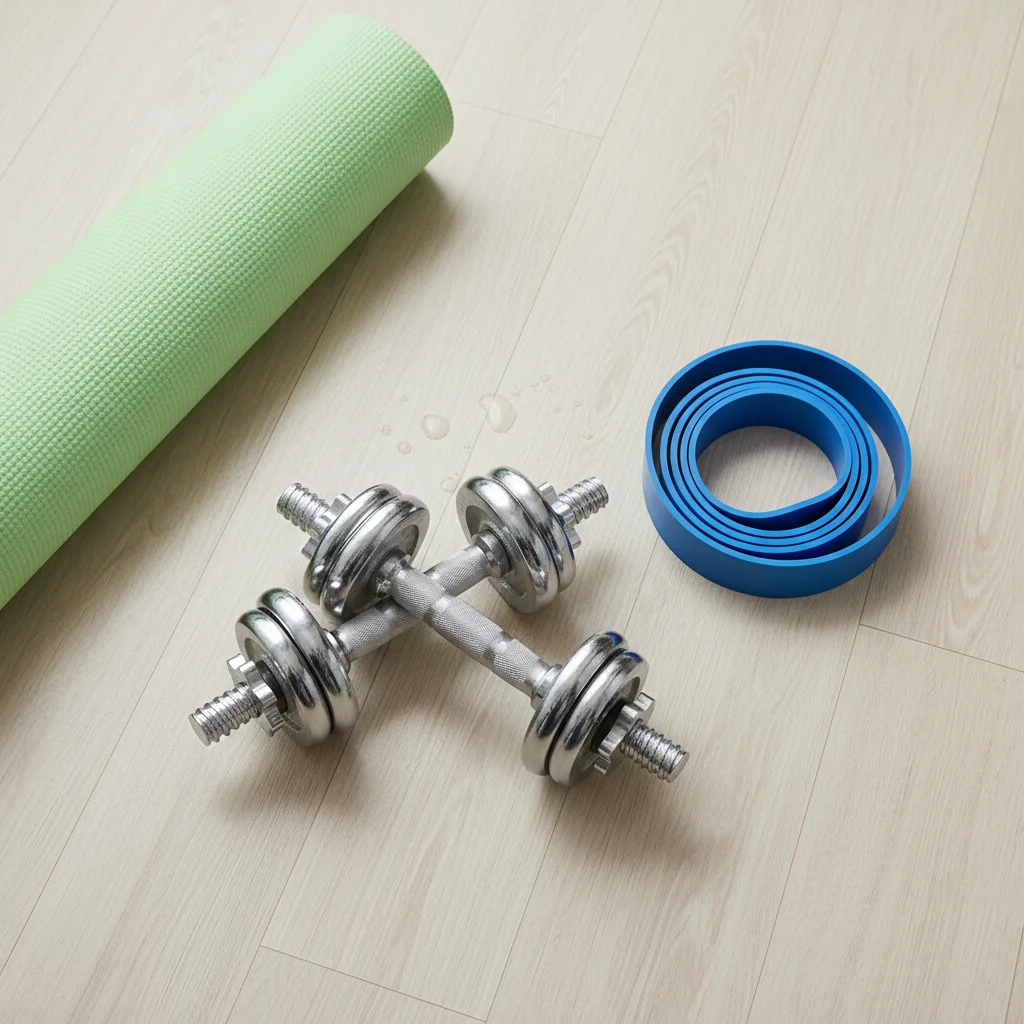
- Yoga Mat: Provides cushioning and grip for floor exercises. Prices typically range from $15 to $40 on Amazon or Target.
- Resistance Bands: Versatile and portable, bands add resistance to bodyweight exercises and come in various strengths. A set usually costs $10-$30.
- Dumbbells: A pair of light dumbbells (3-10 lbs for beginners) can be a game-changer for adding intensity. Look for adjustable sets or individual weights at sporting goods stores or online, typically $20-$60 per pair.
- Sturdy Chair or Bench: You likely already have one at home! Useful for exercises like triceps dips or elevated push-ups.
Remember, start small. You don’t need everything at once. Focus on mastering bodyweight movements first, and then consider adding these tools as you feel ready to increase the challenge.
Building Your Beginner Strength Training Routine: The Exercises
A well-rounded routine targets all major muscle groups. For a beginner, the focus should be on compound movements, which work multiple muscles at once. Aim for 2-3 full-body workouts per week, with at least one rest day in between.
Here’s a sample list of foundational exercises. For each, aim for 2-3 sets of 8-12 repetitions. If an exercise feels too easy, try to slow down the movement, focus on form, or add a resistance band/light dumbbell.
Upper Body
- Push-ups: Start on your knees or against a wall if a full push-up is too challenging. Focus on keeping your body in a straight line.
- Dumbbell Rows (or Bent-Over Rows with resistance band): Use a light dumbbell or a resistance band anchored under your feet. Hinge at your hips, keeping your back straight, and pull the weight or band towards your chest.
- Overhead Press (with light dumbbells or resistance band): Standing or seated, press weights or a resistance band (standing on it, holding handles at shoulder height) straight overhead.
Lower Body
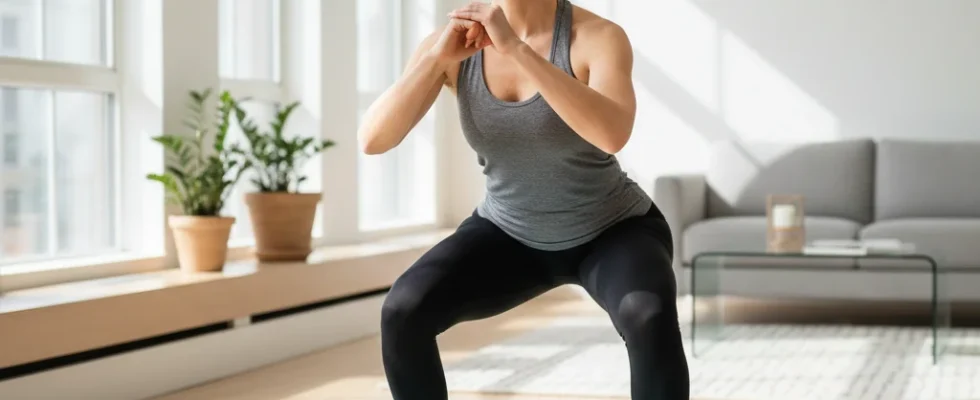
- Squats: Keep your feet shoulder-width apart, chest up, and lower as if sitting into a chair. Aim for your thighs parallel to the floor.
- Lunges: Step forward with one leg, lowering your hips until both knees are bent at approximately 90-degree angles. Ensure your front knee doesn’t go past your toes. Alternate legs.
- Glute Bridges: Lie on your back with knees bent, feet flat on the floor. Lift your hips towards the ceiling, squeezing your glutes at the top.
Core
- Plank: Hold a straight line from head to heels, engaging your core. Start with 20-30 seconds and build up.
- Crunches: Lie on your back, knees bent, feet flat. Lift your head and shoulders off the floor, engaging your abs.
Before each workout, do a 5-minute warm-up (light cardio like marching in place, arm circles). After your workout, spend 5-10 minutes stretching the muscles you just worked.
Progression and Consistency
The key to seeing results in your beginner strength training is consistency and progressive overload. Progressive overload simply means gradually increasing the challenge over time. If you keep doing the exact same workout with the same weights and reps, your body will adapt and stop making progress.
Here’s how to progressively overload your home workouts:
- Increase Reps: Once you can comfortably do 12 reps of an exercise with good form, try to do 15.
- Add Sets: If you’re doing 2 sets, try adding a third set.
- Increase Resistance: Introduce resistance bands, heavier dumbbells, or try more challenging variations of bodyweight exercises (e.g., elevated push-ups to full push-ups).
- Slow Down: Performing exercises with a slower, more controlled tempo increases time under tension, making them harder.
- Shorten Rest Times: Reducing the rest period between sets can also increase intensity.
Listen to your body. Some muscle soreness is normal, especially when starting, but sharp pain is a sign to stop. Rest days are crucial for muscle recovery and growth. Aim for at least 24-48 hours between working the same muscle groups intensely.
Quick Takeaways
- Start your home strength training with bodyweight exercises and gradually add resistance.
- Focus on compound movements like squats, push-ups, and lunges to work multiple muscle groups.
- Consistency and progressive overload are key for seeing results and getting stronger over time.
FAQ
Q: How often should a beginner strength train at home?
A: For beginners, 2-3 full-body strength training sessions per week are ideal. This allows for adequate muscle recovery and helps build a consistent routine without overtraining.
Q: Do I need to buy weights to start strength training at home?
A: No, you don’t! You can start with bodyweight exercises like squats, push-ups, and planks. As you get stronger, you can add resistance bands or light dumbbells to increase the challenge.
Q: How long should each home strength training session be?
A: Including a warm-up and cool-down, a typical beginner strength training session at home can last anywhere from 30 to 45 minutes. Focus on quality movements over extended duration.
Conclusion
Building a beginner strength training routine at home is a fantastic way to invest in your health and well-being. With a little planning and consistency, you can achieve significant strength gains and feel more capable in your daily life. Start with the basics, focus on proper form, and gradually challenge yourself. Your body will thank you!
Ready to try a workout? Check out some online resources for visual guides on proper form for the exercises listed above. Remember, every strong journey begins with a single step (or squat!).
This article is for informational purposes only and is not a substitute for professional medical advice. Talk to your doctor before making changes to your health routine.